Just a couple of months after purchasing a new iPhone, I accidentally dropped it. I was taking a walk and my hands were frozen because of the cold. I dropped the phone while I was holding it because I had no sensitivity in my hands. At first the fall didn’t appear to have caused severe damage, but then I was shocked to notice blue vertical lines slowly forming all over the shiny screen’s surface. After the first instants, the screen was covered in a fancy stripy pattern; a few minutes later it was totally unresponsive. The only protections on the iPhone at the time of the fall were a thin plastic case and a film screen protector. It wouldn’t have been so bad with the older 3G/3GS models: I dropped my older iPhone a number of times and it kept on working just fine until it had an accident involving a pool of water and a car. The 4S however broke as soon as it touched the ground on that single instance and to replace the screen I spent ISK 25,000 ($207) with tears in my eyes. Not that this proves anything, but probably I was not the only one so stupid and careless to drop the device in a moment of distraction: on the desk of the local repair service at least 6 or 7 other iPhones with broken screens were stacked up on the very same day. Iceland is a small country and 7 broken iPhones per day is quite a lot, especially given the country’s population. Perhaps iPhones could be a little sturdier, so that even awkward people like me could safely handle them.
Sometimes it takes just a slight power-up to make everything better. Photojojo wide angle and macro for camera phone come together as a double lens. Yes, it’s a single lens you are getting: by unscrewing the wide angle top, you have the macro ready. Always make sure that the wide angle is secured to the macro before putting the lens away, so that you don’t accidentally lose it.
As the name clearly states, a wide angle lens allows to capture a larger portion of the scene you aim it at. The wide angle is great for emphasizing a sense of distance and vastity. One of the most evident features of images taken with a wide angle lens, Photojojo’s included, is the perspective distortion: straight lines appear more or less warped, close objects appear unnaturally large, while distant objects appear much smaller than they actually are. Because of distortion, a wide angle lens is usually not recommended for shooting portraits, unless conveying a peculiar effect is desired.
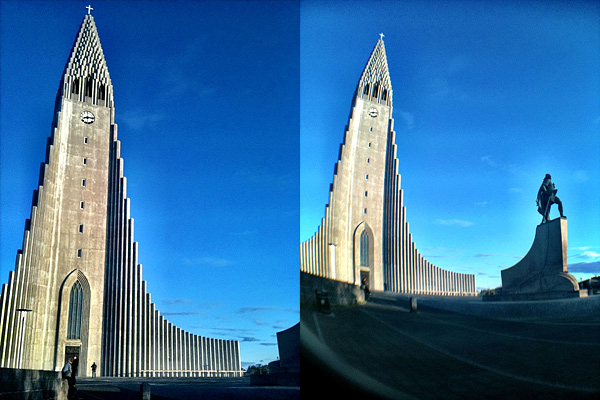
Here are a couple of sample shots taken in Camera+ for iPhone. I took two photos of the Hallgrímskirkja, one of the main landmarks in the city of Reykjavík. There is something wrong with the first picture: where is good old Leif Erikson (left)? Look, there he is (right)! As you can see, the first photo, taken with iPhone native lens, has a rather “crammed” feeling to it — and I couldn’t fit the nearby statue in it. The second shot feels more spacious, thanks to the lens’ wider angle.
Some more examples.
The only issue with the wide angle is that, depending on the camera phone you are using, the edge of the lens may end in your photo together with the rest of the scene. It is nothing you cannot crop out of the picture (or remove with the help of apps like TouchRetouch). This issue will affect you more or less negatively depending on what you are photographing: if precision in framing is a priority, then this problem may seriously get in the way.
Photojojo’s macro is not exactly a macro lens but rather a close-up filter, that is a secondary lens permitting to photograph subjects up close making use of the camera phone’s native lens. If you want to get incredibly closer to your subjects, if you want to show minute details, the macro lens is what you are looking for.
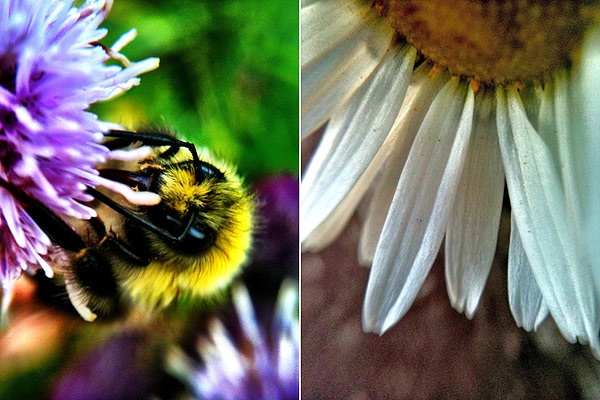
The macro, which is capable of taking pictures 10-23mm from your subjects, is definitely my favorite lens in Photojojo’s bundle. Going macro is indeed like seeing things for the first time. Be careful when using the macro, because depth of field becomes narrower, so you have to pay attention to what you want to appear in focus. Here are more photos taken with it.
From the same kit is the fisheye lens. Honestly, I’m not a great fan of fisheye photography, mostly because I think the fisheye is a difficult lens to handle properly. You have to find the right subjects and conditions to make a fisheye photo spectacular, while most people just think using this type of lens is an end in itself. For this reason, most fisheye photos mean absolutely nothing beyond the effect provided by the lens. I have no problems admitting I am not a gifted fisheye user. A fisheye is not only hard to handle, but also hard to manufacture. Needless to say that, for its strong character, imitating the effect of the lens digitally often produces lame results.
Same angle, same distance: before and after fisheye lens.
A fisheye is an ultra-wide angle lens that, due to its angle of view, produces images characterized by extreme barrel distortion. Photojojo’s lens can take 180° photos. This means the lens will come in handy whenever you have to capture a scene that is beyond the wide angle capabilities. The fisheye also lends itself to many different expressive uses, like creating unique architectural effects or panoramas that intensify the scene’s sense of space. As you can see from the examples, fitting large objects in a single frame is impossible with the iPhone’s native lens, while it is not a problem with the fisheye.
Same shot with fisheye lens on, taken in Camera+and edited in Cameramatic.
Photojojo’s fisheye is built to work better on camera phones with a flat body. On curved bodies, like that of 3GS, the shape of the phone will limit the possibilities of the lens, as I explained above for the wide angle.
Like the telephoto, which we have recently reviewed, the wide angle/macro lens and the fisheye come with two adhesive rings for easy attaching and detaching, a front cover in plastic and a magnetic cover for the back. The price tag for the double wide angle/macro is lens is $20, while the fisheye is $25. You can get them both together with the telephoto at the special price of $49 from Photojojo store.
Photojojo kindly provided us with the lenses for reviewing purposes.
Camera phones, iPhone too, are usually equipped with a digital zoom feature to make distant details appear closer. Digital zoom is not accomplished by the camera’s optics, it’s all calculations of the software’s algorithms. What digital zoom basically does is cropping the original image, keeping its aspect ratio, in order to give you the impression to look at a magnified image. As a matter of fact, you are only looking at a small part of a whole. Using a digital zoom affects negatively the overall image quality because, to produce a larger image, the software interpolates new pixels to make up for the missing data. I personally never use the iPhone digital zoom, not even when I have no other choice. It’s totally useless.
To get rid of digital zoom, you can use camera add-ons, like Photojojo’s telephoto lens. The purpose of the telephoto lens is exactly to help you getting closer to your subjects without having to move and without resorting to digital zoom. Although Photojojo’s telephoto phone lens only allows a 2x magnification, the fact it uses optical features instead of software to achieve the same effect makes a great difference. The lens, with a narrower angle of view than that of iPhone’s and other camera phones’ native lenses, replaces the fake magnification enabled by the digital zoom, without lessening the overall image quality. Yes, of course, you can always get closer to your subjects instead of using a camera add-on. However, we all know there are cases in which getting closer is not possible for various reasons.
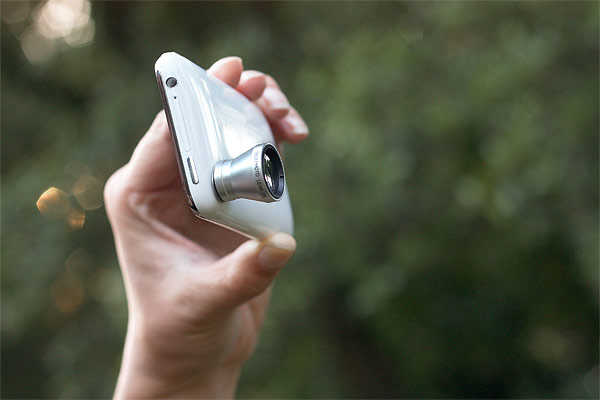
The telephoto lens fits most camera phones. Its metal body can be attached to your phone thanks to an adhesive magnetic ring, which allows quick and easy attachment and detachment.
Besides magnification, the telephoto’s most noticeable feature is a slight blur around the borders, which sort of conveys a tilt-shift look in some instances. The effect can be pleasantly surprising, if applied to the right subject and in combination with the right idea. I find the blur adds to images a charming analog toy camera touch that is much more convincing than similar effects you can apply in post-processing with specialized applications. With the scene you will be aiming at, camera movements are also magnified with the lens on, so the best way to minimize blur is to use a stable surface or a tripod to support the camera. In any case, if you want images to be less blurry, do not try to hold the iPhone or other camera while a 30 km/h wind is blowing, as I did…
Here are a few samples of images taken with the iPhone with the telephoto lens on (apps used: Camera+ and iCamera HDR): on the left is the original scene without telephoto, on the right the same scene with telephoto on.
The results lend themselves to many creative possibilities which is up to you to explore. I am quite enthralled by the suggestions evoked by images captured with the telephoto lens on.
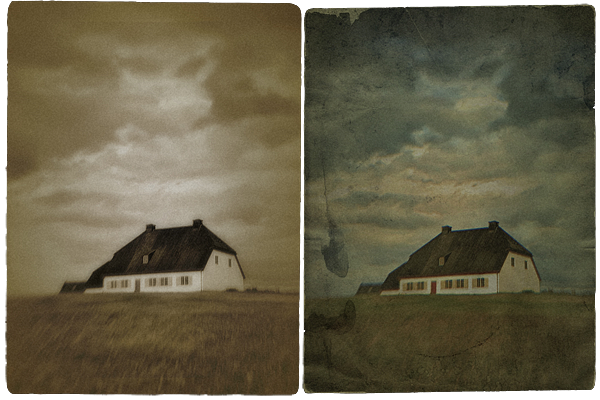
Taken with Photojojo 2x telephoto lens in iCamera HDR and processed in VintageScene.
The actual lens is so small (25mm of diameter and 15mm in length) that you can bring it anywhere in your pocket. The telephoto doesn’t allow focus adjustment, but it cleverly comes with protection covers, both for front (in plastic) and for the back (magnetic). With the lens also come two adhesive magnetic rings, so that you can use your telephoto with more than a camera phone, if you own more than one. The spare ring will also come in handy if you are like me and prone to losing everything.
The 2x telephoto is a nice add-on, especially for its price ($20); it can also be purchased bundled with wide angle/macro and fisheye. You can get it from Photojojo store. The quality of materials alone is enough to justify the purchase. And what about all the fun you can have with it?
Coming next, the other lenses in the kit: wide angle/macro and fisheye.
Photojojo kindly provided us with the lens for reviewing purposes.
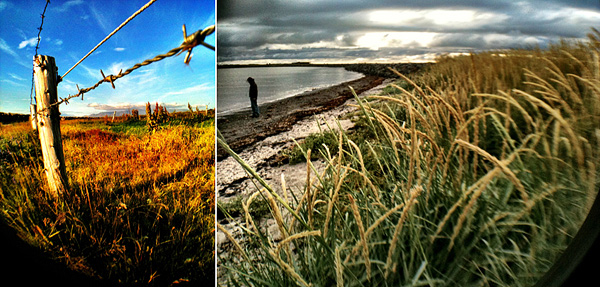 The only issue with the wide angle is that, depending on the camera phone you are using, the edge of the lens may end in your photo together with the rest of the scene. It is nothing you cannot crop out of the picture (or remove with the help of apps like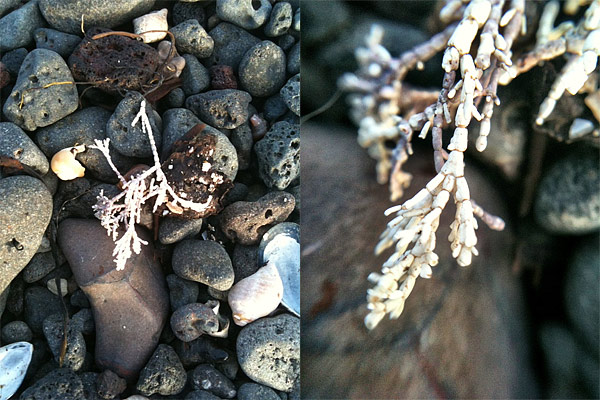
 From the same kit is the fisheye lens. Honestly, I’m not a great fan of fisheye photography, mostly because I think the fisheye is a difficult lens to handle properly. You have to find the right subjects and conditions to make a fisheye photo spectacular, while most people just think using this type of lens is an end in itself. For this reason, most fisheye photos mean absolutely nothing beyond the effect provided by the lens. I have no problems admitting I am not a gifted fisheye user. A fisheye is not only hard to handle, but also hard to manufacture. Needless to say that, for its strong character, imitating the effect of the lens digitally often produces lame results.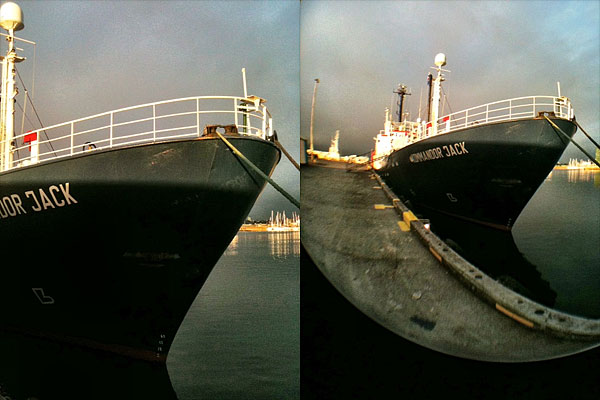
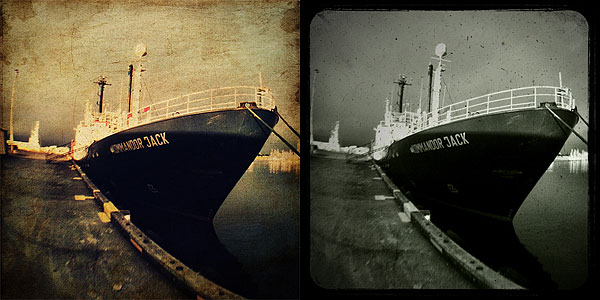
 Besides magnification, the telephoto’s most noticeable feature is a slight blur around the borders, which sort of conveys a tilt-shift look in some instances. The effect can be pleasantly surprising, if applied to the right subject and in combination with the right idea. I find the blur adds to images a charming analog toy camera touch that is much more convincing than similar effects you can apply in post-processing with specialized applications. With the scene you will be aiming at, camera movements are also magnified with the lens on, so the best way to minimize blur is to use a stable surface or a tripod to support the camera. In any case, if you want images to be less blurry, do not try to hold the iPhone or other camera while a 30 km/h wind is blowing, as I did…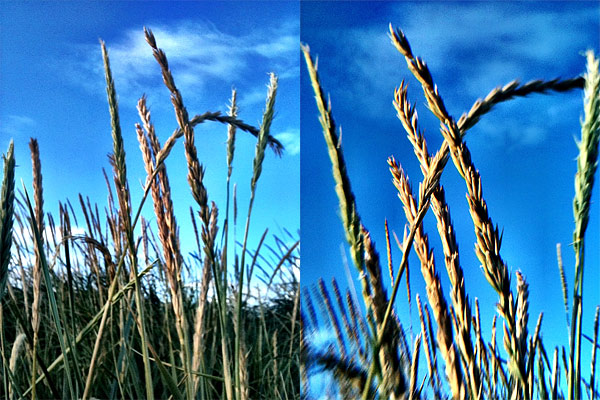
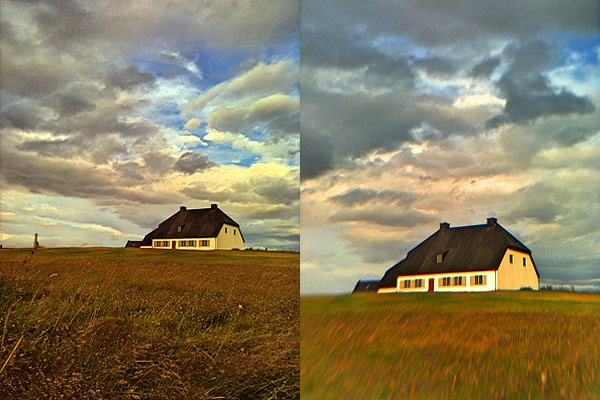 The results lend themselves to many creative possibilities which is up to you to explore. I am quite enthralled by the suggestions evoked by images captured with the telephoto lens on.